
Core Insights
Introduction
A direct-to-consumer wellness brand with 80,000 email subscribers had been watching GLP-1 demand build in their audience for over a year. Subscribers were asking by name semaglutide, Ozempic, GLP-1 — in reply emails and comment threads. The brand had positioned itself around metabolic health for years. The clinical category was the natural next step.
What they did not have: clinical infrastructure, provider relationships, pharmacy contracts, or HIPAA-compliant data architecture. They had no appetite to hire a clinical director or spend months negotiating with a 503B compounding pharmacy.
The Challenge
Before approaching FuseHealth, the operator evaluated two paths. A healthcare attorney quoted 14 to 18 months and significant capital to build proprietary infrastructure — accounting for LegitScript certification (60 to 90 days alone), provider credentialing across target states, pharmacy contracting, and HIPAA architecture development.
The second option was a clinical-review-only platform with no pharmacy integration or subscription billing meaning three separate vendors from day one. The operational overhead would have consumed the program margin entirely. Neither path matched the window. GLP-1 demand was peaking. Every week without a program was revenue going to competitors.
Step 1 — Intake Configuration
The form qualified patients for the GLP-1 program within the clinical parameters required by the prescribing protocol. Patients who did not meet criteria were filtered before reaching provider review protecting clinical integrity and reducing provider time on ineligible submissions.
Step 2 — Provider Review
Qualified submissions were routed to licensed providers through the FuseHealth async review workflow. Providers reviewed submissions within the defined SLA. Prescribing decisions followed the documented protocol for the GLP-1 weight loss category. The brand had no visibility into individual patient health data that layer was maintained within the clinical infrastructure.
Step 3 — Subscription Refill Logic
Refill cycles were configured before the first patient enrolled. When a program cycle completed, the next supply was initiated automatically. Patients remained enrolled without manual reordering. This automated logic is what converts a one-time GLP-1 transaction into a predictable monthly recurring revenue stream.
Structured Clinical Intake — Patients fed directly into the provider review queue — no manual routing, no staff involvement in the clinical handoff.
LegitScript Certification Live at Launch — Built into the pre-launch sequence, not deferred. Paid acquisition on Google and Meta was available from day one.
Automated Subscription Refill — The refill workflow was live before the first patient enrolled. Monthly recurring revenue compounded from the first cycle.
Healthcare-Category Payment Infrastructure — Standard merchant accounts frequently fail for healthcare subscription billing. Confirmed and configured before the first charge processed.
Churn Prevention Triggers — Automated retention logic configured before go-live. Failed payments, expiring cards, and lapsed refills routed to recovery flows without manual intervention.
Build Your Telehealth Platform Faster
Launching digital healthcare services requires complex infrastructure. Fuse provides the tools needed to connect patients, providers, and pharmacies in one platform.
Step 4 — Pharmacy Fulfillment
Approved prescriptions were routed automatically to the configured compounding pharmacy partner. Medication was compounded and shipped directly to patients. The operator had zero manual involvement in the fulfillment chain. The first patient shipment went out without a single brand staff member touching a prescription or pharmacy order.
What Launched
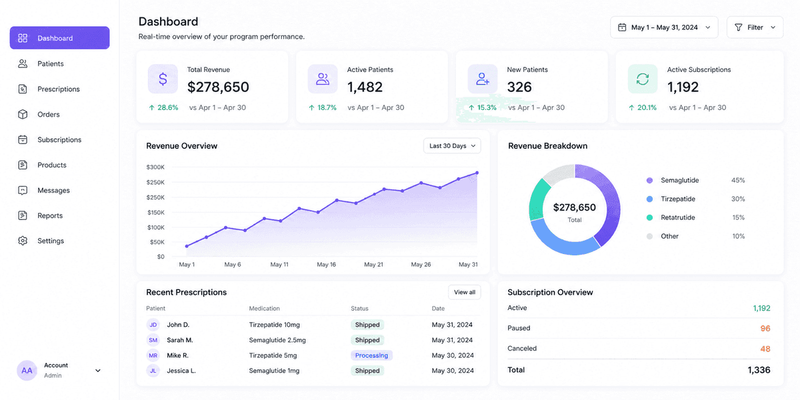
The brand went from no clinical infrastructure to a live GLP-1 program within weeks. LegitScript certification was integrated into the launch sequence rather than treated as a post-launch step. Subscription refill infrastructure was live before the first patient enrolled. Payment infrastructure was configured for the healthcare category before the first charge.
Core Insights
The brand launched a compliant GLP-1 program in weeks — not the 14 to 18 months quoted for a proprietary build. Paid acquisition began immediately because LegitScript certification was part of the setup sequence. The first refill cycle generated recurring revenue before the brand had spent further acquisition budget on that cohort.
Within 90 days, monthly recurring revenue from refills exceeded first-purchase revenue — the signature outcome of a well-structured subscription telehealth program. The operator managed brand, content, and acquisition. FuseHealth managed provider review, pharmacy routing, refill logic, and compliance.
References
FDA GLP-1 shortage classification updates (2024–2025) · LegitScript Healthcare Merchant Certification Guidelines · HHS Telehealth.gov · McKinsey & Company Consumer Health Survey (2024) · Hims & Hers Health SEC Filings (2024)

Daniel is a two-time founder who has scaled service businesses across major U.S. markets. A Y Combinator competition winner, he focuses on removing operational and regulatory barriers so operators can build and scale modern healthcare businesses.
- Background
- Startup Operations & Service Systems
- Experience
- 2x Founder, Multi-Market U.S. Scaling
- Qualifications
- Healthtech Market Expertise & Operational Scaling
- Key Achievement
- Scaled Premier Staff & Eventstaff across major U.S. markets