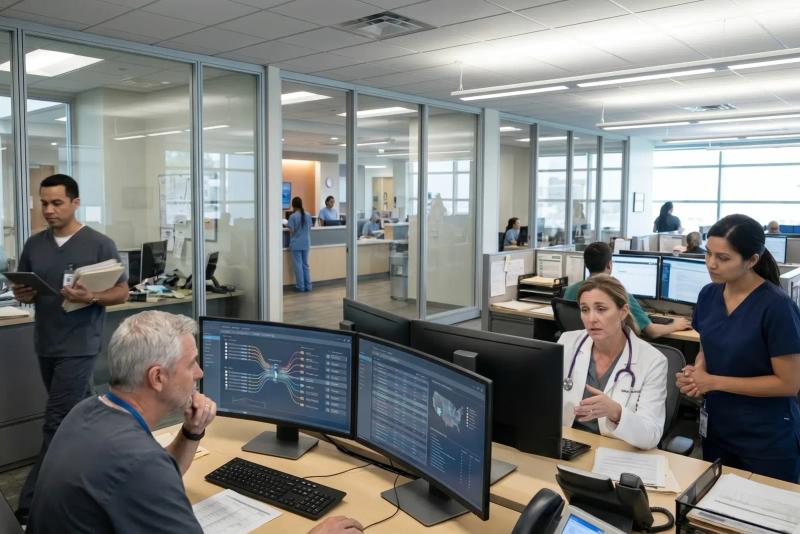

Healthcare SaaS is a broad category that ranges from clinical EHR systems to white label telehealth infrastructure. Most telehealth operators — especially non-clinical ones — need a much narrower set of capabilities than the category implies. Choosing the wrong platform type is one of the most common and expensive mistakes in early-stage telehealth.
What Healthcare SaaS Actually Includes
Healthcare SaaS includes the operational infrastructure that powers modern healthcare businesses. Depending on the platform, this can include patient intake systems, provider coordination, scheduling workflows, EHR functionality, prescription routing, subscription billing, telehealth communication tools, and pharmacy integrations.
Not every operator needs the same stack. Traditional clinical groups often require deep EHR and insurance workflows, while non-clinical DTC telehealth operators prioritize intake automation, async prescribing support, patient communication, fulfillment coordination, and subscription management. The right platform should align with the operational model being built rather than forcing unnecessary clinical complexity into the business.
Integrated vs Best of Breed
Many telehealth operators initially combine separate tools for intake, scheduling, messaging, pharmacy coordination, CRM management, and subscriptions. While this “best-of-breed” approach can appear flexible early on, fragmented systems often create operational bottlenecks as patient volume increases.
Integrated healthcare SaaS platforms centralize these workflows into one operational layer. Instead of managing disconnected systems and multiple vendors, operators can oversee intake, provider workflows, prescription routing, communication, and recurring patient management through a unified infrastructure. For DTC telehealth businesses especially, operational simplicity becomes a major scaling advantage once acquisition volume begins increasing.
Five Non-Negotiables for Telehealth SaaS
Healthcare SaaS platforms built for telehealth operators should support far more than video consultations alone. Compliance infrastructure, operational automation, and patient management systems all directly affect scalability.
Key requirements include:
- Documented HIPAA-compliant infrastructure
- Async care and prescribing workflows
- Integrated patient communication systems
- Subscription and recurring billing management
- Pharmacy and fulfillment coordination
Many operators also evaluate LegitScript certification status when choosing infrastructure because advertising access and payment processor stability increasingly depend on healthcare compliance standards. The right SaaS platform should reduce operational friction while supporting compliant growth across acquisition, prescribing, and retention workflows.
How FUSE Health Fits the Healthcare SaaS Category
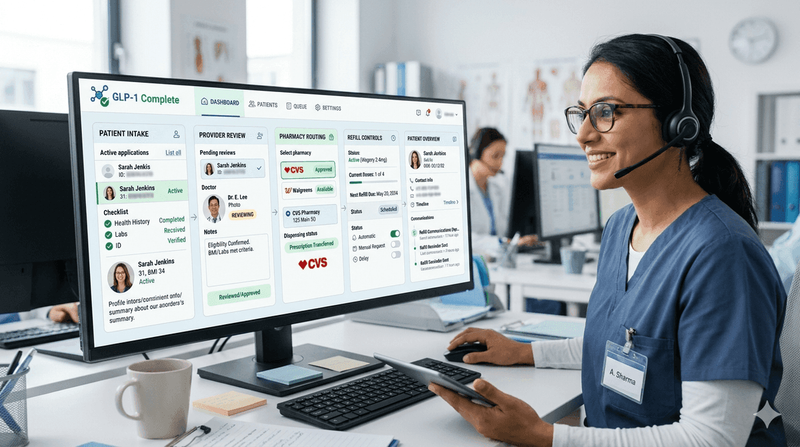
FUSE Health is designed specifically for non-clinical DTC telehealth operators that need healthcare infrastructure without building complex backend systems internally. The platform centralizes operational workflows including intake management, provider coordination, prescription routing, patient communication, and recurring program management inside a single environment.
Rather than forcing operators to assemble disconnected software tools, FUSE Health provides infrastructure designed for scalable telehealth operations. Clinical decisions remain under licensed provider oversight while operators maintain visibility into branding, operational management, patient experience, and growth systems.
Why Operators Choose FUSE Health
Telehealth operators often outgrow fragmented software stacks faster than expected. As patient volume increases, disconnected workflows create delays across intake, communication, provider coordination, prescription routing, and fulfillment operations.
Integrated healthcare SaaS infrastructure simplifies these operational layers by reducing vendor sprawl and centralizing patient workflows into one scalable system. For operators focused on retention, subscription continuity, and long-term patient experience, infrastructure efficiency becomes just as important as acquisition performance. Platforms built specifically for telehealth operations allow businesses to scale without rebuilding core systems repeatedly as volume grows.
Conclusion
The most effective healthcare SaaS platforms for telehealth operators are not simply collections of software features. They are operational systems designed to support compliant growth, scalable patient management, provider coordination, and long-term retention without forcing operators to manage unnecessary technical complexity internally.
References.
HHS Telehealth.gov · LegitScript Healthcare Certification (2025) · American Telemedicine Association (2025) · McKinsey Consumer Health Report (2024) · FUSE Health Platform Documentation.

Daniel is a two-time founder who has scaled service businesses across major U.S. markets. A Y Combinator competition winner, he focuses on removing operational and regulatory barriers so operators can build and scale modern healthcare businesses.
- Background
- Startup Operations & Service Systems
- Experience
- 2x Founder, Multi-Market U.S. Scaling
- Qualifications
- Healthtech Market Expertise & Operational Scaling
- Key Achievement
- Scaled Premier Staff & Eventstaff across major U.S. markets