
Building a white label pharmacy layer and a full telehealth platform from scratch costs more and takes longer than most operators expect. Buying the right platform cuts that timeline dramatically. This guide covers what the decision actually comes down to.
Should You Build or Buy? The Real Question Behind the Decision
If you run a wellness brand, a med spa, or a direct-to-consumer health operation, this question eventually comes up: should we build it ourselves or use an existing platform?
It sounds like a product question. It's an infrastructure question. The real issue isn't whether you can build a white label pharmacy layer or connect a white label or low code telehealth solution. You probably can, given time and budget. The question is whether you should, and what 'buying' actually means in a category where platforms range from a basic intake form to a full clinical operating system.
I've watched brands spend six months building what they could have launched in six weeks. Here's how to think through the decision clearly.
What You're Actually Building, Or Buying
Most operators approach this as a software decision. That framing causes problems. A telehealth program is a chain of connected components, each with its own compliance requirements and vendor relationships:
- A white-label EHR platform where licensed providers review intake data and issue prescriptions
- A white label pharmacy that fulfills those prescriptions under your program's brand
- A patient intake and consent layer that captures clinical information in the correct format
- Payment infrastructure that handles authorization, capture, and subscription logic in sequence
- A provider network licensed in your target states and connected to the platform
Building means assembling all five and making them work together. Buying means finding a platform where they're already connected and configuring your program within them.
The Case for Building Your Own Platform
There are real reasons to build. If you have a genuinely differentiated clinical model, workflow requirements no existing white label or low code telehealth solution can support, and the technical capacity to execute, building gives you full control over every layer.
The honest costs:
- Credentialing a white label pharmacy independently: 503A/503B verification, compliance vetting, and contract negotiation before a single order ships
- Building or licensing a white-label EHR platform with HIPAA-compliant intake-to-prescribing workflow
- Configuring payment authorization flows that hold funds until clinical review completes. Standard payment processors don't support this natively.
- Provider credentialing in each state where you plan to operate, which takes weeks per state and requires ongoing maintenance
The white label pharmacy compliance layer is what most brands underestimate. Getting a 503A or 503B compounding pharmacy relationship in place before accepting orders doesn't compress on a developer's timeline.
Source: FDA, Human Drug Compounding, fda.gov/drugs/human-drug-compounding
The Case for Buying: What a Real Platform Looks Like
Buying means using an existing white label or low code telehealth solution where the pharmacy network, EHR layer, and payment infrastructure are already built and connected. You configure your program within that infrastructure rather than assembling it yourself.
The speed advantage is concrete. A brand on an existing platform launches in four to six weeks. A brand building the same infrastructure often takes six months or more. That gap doesn't close easily once a competitor holds it.
What actually matters when evaluating a buy:
1. Is the white label pharmacy integration pre-configured or assembled after you sign?
Some platforms have standing white label pharmacy relationships with defined fulfillment logic. Others connect you to a network and call it integration. Ask: is routing configured before launch, or set up afterward?
2. How does the white-label EHR platform handle intake-to-prescribing?
If intake data flows automatically into structured provider review, the workflow is scalable. If a human touches each record before a provider sees it, your cost per order grows with volume. Ask to see the white-label EHR platform intake-to-review flow live, not in a deck.
3. Does the platform carry its own compliance layer?
A real white label or low code telehealth solution carries LegitScript certification readiness, HIPAA data handling, state licensing coverage, and defined pharmacy routing. If it hands you a compliance checklist and tells you to manage it yourself, that's a software license, not a platform.
The Comparison That Matters and What FUSE Health Is Built For
Most build vs buy comparisons focus on cost. The more useful comparison is time-to-revenue and risk surface.
- Build timeline: 4 to 9 months to first order. Every week before launch is a week without revenue.
- Buy timeline: 4 to 8 weeks on a well-configured platform, because pharmacy routing, the provider network, and the EHR handoff are already built.
- Build risk: You own every compliance gap. A missed 503A/503B classification or misconfigured payment capture is entirely your problem.
- Buy risk: Concentrated in vendor selection. Choose a platform with weak compliance infrastructure and that risk transfers to your program.
The build case applies to operators with deep technical resources, a unique clinical model, and no near-term revenue pressure. For most operators, the real choice is between a fast, viable launch and a slow, expensive one.
What FuseHealth Is Built For
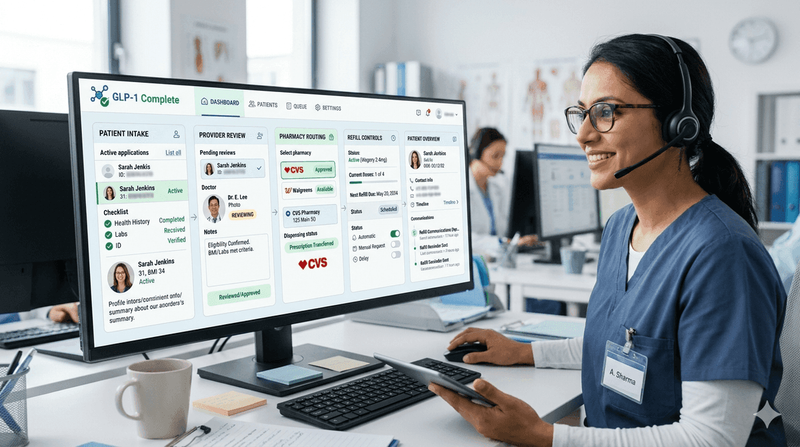
FuseHealth runs on a storefront-first model. Operators own their brand, customer relationships, and pricing. The white label pharmacy network, white-label EHR platform, and payment infrastructure run behind the storefront as configured infrastructure.
- The white label pharmacy connection is configured to your prescription model before launch. 503A/503B routing, fulfillment timelines, and refill logic set in advance.
- The white-label EHR platform routes intake data directly into provider review. No manual handling between intake and clinical decision.
- Payment authorization held until clinical review completes. Capture happens at prescription issuance, not at intake.
- HIPAA data handling, LegitScript certification readiness, and state licensing coverage built into the platform.
FuseHealth is a white label or low code telehealth solution built for operators adding a healthcare revenue stream, not building a healthcare company from scratch. The infrastructure is already there. You configure your program within it.
Conclusion
Build if you have a genuinely unique clinical model and the resources to execute it. Buy if you want a viable healthcare program, a protected compliance posture, and revenue before the build would even be finished.
The white label pharmacy layer, the EHR integration, the payment flow structure: these are solved problems on the right platform. FuseHealth has built and maintained that infrastructure so operators don't have to. If you want to see how it runs before committing, book a walkthrough. That's where the decision gets clear.
References
1. FDA: FD&C Act Provisions That Apply to Human Drug Compounding (503A vs 503B Overview)
2. FDA: Pharmacy Compounding of Human Drug Products Under Section 503A
3. LegitScript: Healthcare Certification

Daniel is a two-time founder who has scaled service businesses across major U.S. markets. A Y Combinator competition winner, he focuses on removing operational and regulatory barriers so operators can build and scale modern healthcare businesses.
- Background
- Startup Operations & Service Systems
- Experience
- 2x Founder, Multi-Market U.S. Scaling
- Qualifications
- Healthtech Market Expertise & Operational Scaling
- Key Achievement
- Scaled Premier Staff & Eventstaff across major U.S. markets